Manual Handling FAQs

Key Highlights:

  • Manual handling is defined as the lifting, carrying, pushing, or pulling of a load by human effort and is a major cause of workplace injuries in the UK.

  • The Manual Handling Operations Regulations 1992 (MHOR) set out legal duties for employers, including risk assessments, training, and safe handling procedures.

  • Using ergonomic approaches, TILE/TILEO risk assessments, and safe lifting techniques can significantly reduce the risk of injury and improve workplace safety.

For a complete overview of manual handling regulations, risk assessments, and training requirements, explore our full manual handling guide.

Introduction

Manual handling is a common activity in many workplaces, yet it remains one of the leading causes of work-related injuries in the UK. Understanding manual handling techniques, the associated risks, and the legal requirements is essential for both employers and employees.

This FAQ guide provides clear answers to key questions about manual handling, including its definition, examples, safe techniques, and relevant legislation such as the Manual Handling Operations Regulations 1992 (MHOR). It also covers employer responsibilities, risk assessments, and practical guidance on safe lifting and moving of loads, ensuring health and safety in manual handling is prioritised across all sectors.

figure carrying a load to demonstrate manual handling

What is manual handling?

The term 'manual handling' or 'moving and handling' is defined as:

"The transportation or support of a load by human effort alone."

This effort may be applied directly, for example, pushing, pulling or carrying a load or indirectly using a rope or a lever.

In the Manual Handling Operations Regulations 1992 (as amended) (MHOR), the Regulations define manual handling as: "...any transporting or supporting of a load (including the lifting, putting down, pushing, pulling, carrying or moving thereof) by hand or bodily force". The load can be an object, person or animal.

What are the UK Manual Handling Operations Regulations 1992 (MHOR)?

The Manual Handling Operations Regulations 1992 (known as MHOR) are UK laws designed to reduce workplace injuries caused by lifting, carrying, pushing and pulling. They were updated in 2002 and apply to a wide range of tasks, from moving boxes in a warehouse to handling patients in care settings.

Employer duties under MHOR include:
  • Assessing manual handling risks where there is a chance of injury

  • Avoiding hazardous handling tasks where possible

  • Reducing risks if manual handling cannot be avoided

  • Providing information, instruction, and training to employees

MHOR sits alongside the Health and Safety at Work Act 1974, which sets out broader health and safety duties for both employers and employees in Great Britain. In short: employers must manage risks and provide training, while employees must follow safe systems of work and use equipment correctly.

What does TILE or TILEO stand for in manual handling?

TILE or TILEO are acronyms to help you prepare a manual handling risk assessment. The acronym 'TILE' stands for:

TASK, INDIVIDUAL, LOAD, ENVIRONMENT By considering each of these factors, a suitable risk assessment can be completed. Tileo simply adds OTHER FACTORS to the tile acronym.

What does ICC stand for in manual handling?

This is the Incident Contact Centre (ICC), a 'one-stop' reporting service for work-related health and safety incidents, such as an injury from manual handling that needs reporting under RIDDOR. The ICC is primarily a call centre, open from Monday to Friday on 0345 300 9923.

Can manual handling be avoided completely?

Manual handling can be avoided completely, but it is dependent on the task and situation. Often, it cannot be avoided completely.

Using machines in factory and warehouse work can often completely replace human effort by replacing manual handling tasks with machines, such as forklift trucks, hoists and cranes. However, there will still be occasions when hazardous manual handling cannot be avoided completely, such as delivering heavy parcels, brick-laying, carpet fitting, nursing and many other trades, professions and occupations.

How does good communication reduce the risk of manual handling?

In any manual handling activity where more than one person is involved, good communication is vital to reduce the risk of injury. A nurse trying to move a patient can greatly reduce the risk by communicating to the patient exactly what they are attempting to do and getting the patient to assist as much as possible.

If you are looking for official guidance or a handbook about manual handling, resources are often available from organisations such as the HSE in the UK or your local workplace safety authority. These official handbooks and guidelines provide comprehensive information on safe manual handling practices.

What should a Manual Handling policy at work include?

A manual handling policy at work should include clear procedures for assessing risks, identifying safe methods of lifting or moving loads, training requirements for employees, and guidelines for using equipment and aids. It should also outline the importance of reporting hazards, maintaining good communication among team members, and regularly reviewing safe work practices to ensure ongoing safety and compliance.

What is an ergonomic approach to manual handling?

An ergonomic approach to manual handling means reducing risks by adapting tasks, loads and the environment to suit people, rather than forcing people to fit unsafe tasks. This method uses the TILE factors: Task, Individual, Load, Environment.

Task – e.g. duration and frequency

Individual capability – e.g. age & strength

Load – e.g. shape/weight

Environment - altering the working environment to make handling safer.

If you are looking for more information about approaching manual handling ergonomically, consider reading our detailed article: Manual Handling: What does TILE stand for

What are some examples of high-risk lifting?

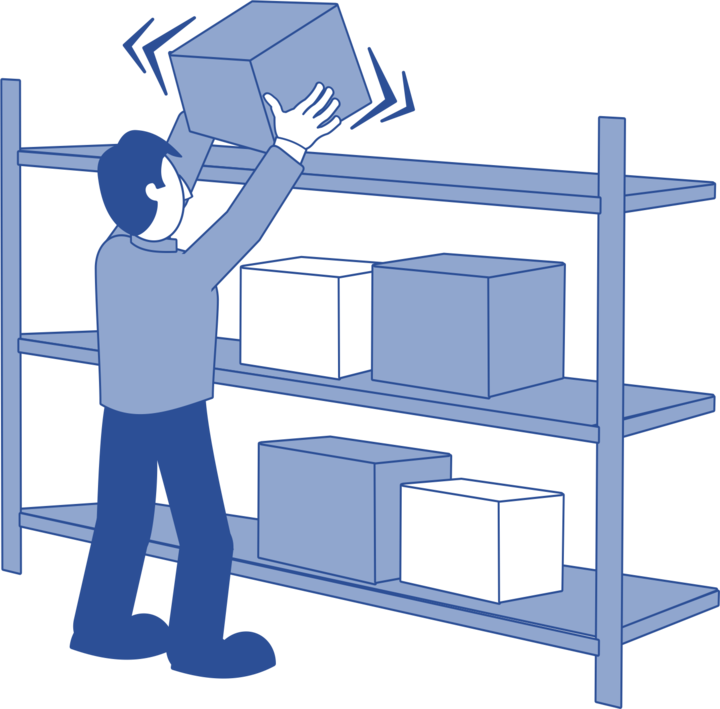
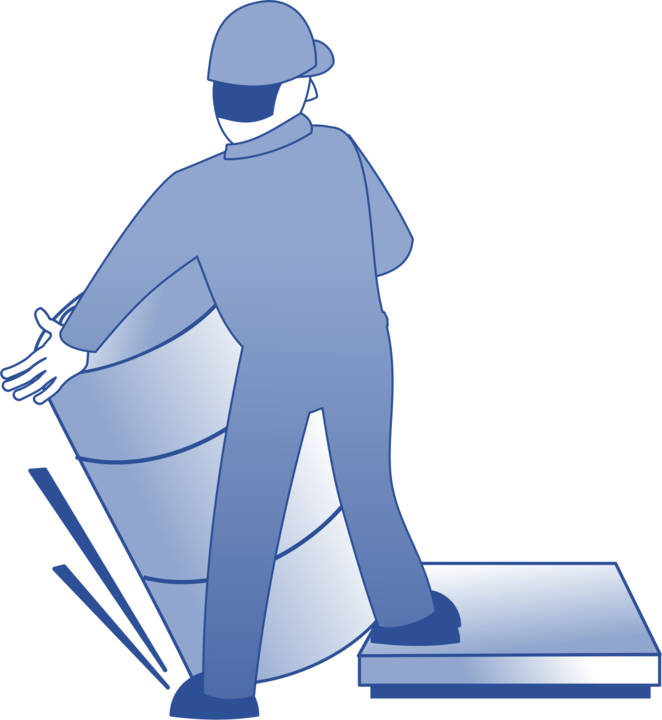
Here are two examples of manual handling activities that are high risk, where an ergonomic approach would reduce the risk.

The box is stored above shoulder height and requires the operator to overstretch to retrieve it, with the possibility of the box falling and injuring the worker or the worker overstretching. Simply repositioning the height of the storage area would reduce the risk from this manual handling activity.

worker lifting a box above head without considering proper manual handling techniques

This operator must roll this heavy drum onto the weigh scales, which are raised. This requires an overall awkward posture as well as potentially being above the recommended lifting guidelines. Re-positioning the scales so that the drum could more easily ‘slide’ onto them, or a manual handling aid such as a pump-up trolley could be used.

worker shifting a drum using manual handling techniques

How to get a manual handling certificate?

The simplest method is via an online training course such as that provided by Commodious. The course downloads immediately and takes around 30 minutes to complete, and then a RoSPA and ISO 9001 quality assured manual handling certificate is issued, which is instantly awarded and downloadable.

How often should manual handling training be carried out?

Manual handling training certificate expiry dates.

There is no legal or mandatory expiry date on training certificates. Some industry sectors, insurance companies, and registration organisations such as CHAS, SafeContractor, SMAS, and other members of the SSIP have their own recommended refresher training dates. Many sectors and organisations insist upon a manual handling training certificate before any manual handling activity takes place on site.

The HSE website states that refresher training should be carried out whenever it is felt necessary (for example, a change in working conditions, the introduction of new equipment, staff or working practices or when it is felt necessary to undertake refresher training). Many registration bodies, such as CHAS, SafeContractor, ConstructionLine and other members of the SSIP scheme, all recommend that re-training is done every 3 years on all courses.

Is using a wheelbarrow or sack cart manual handling?

A common misconception is that Manual Handling Operations Regulations only apply to the lifting, lowering and carrying of loads; they also apply to pushing and pulling, such as using a wheelbarrow or sack cart.

Although when people push and pull, instead of lifting and carrying, less effort is required. There may still be a risk of manual handling accidents and musculoskeletal disorders (MSDs). So it still may be necessary to carry out a suitable and sufficient assessment of this risk of manual handling injury.

The HSE have a useful online tool to help with this sort of risk assessment, called Risk Assessment of Pushing and Pulling (RAPP tool).

How many manual handling operations per hour?

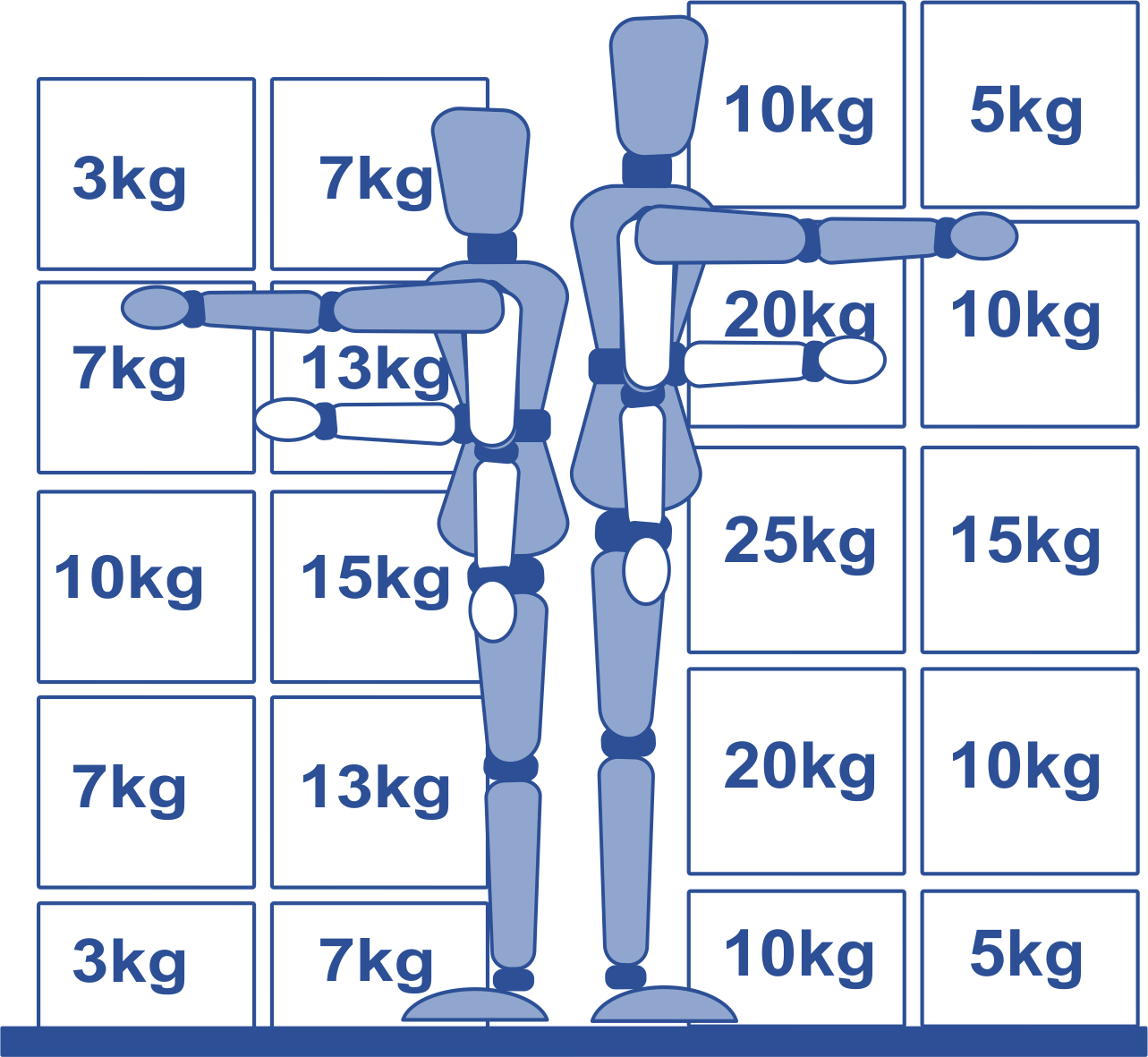
How many of manual handling operations per hour is also dependent on the individual and the weight of the load. The HSE produced a guideline, a diagram of which is shown below.

weight guidance for manual handling

The weights are guidelines only; they are not legal limits and are based on infrequent operations. For repeat tasks (over 30 operations per hour), you would reduce the stated weights in each sector.

As a rough guide, reduce the weights by 30% if the operation is repeated once or twice a minute, by 50% if it is repeated 5-8 times a minute, and by 80% where it is repeated more than 12 times a minute.

Final Thoughts

Safe manual handling is a shared responsibility that requires awareness, training, and proper risk management to minimise potential risks. By following the guidance outlined in this FAQ, including the use of ergonomic approaches, TILE risk assessments, and safe lifting techniques, employers and employees can significantly reduce the level of risk of injuries. Compliance with the Manual Handling Operations Regulations 1992 and other health and safety legislation helps protect workers while creating a safer, more efficient workplace.

Regular training, clear communication, and the correct use of equipment and aids are key to promoting safety and ensuring that manual handling activities are carried out responsibly and effectively.

For more detailed guidance or to ensure your team is trained, see our IOSH-accredited manual handling training courses.

Bethany Wesson

Bethany Wesson

Bethany is a freelance content writer and has produced articles for the Commodious Knowledge Bank since 2023. She has written about various health and safety topics, from asbestos to wellness in the workplace.

  • Manual Handling
  • Hazards
  • Health and Safety